
- March 24, 2026
- By: Riddhi Pharma Machinery Ltd.
- No Comments
Roll Compactor vs Fluid Bed Processor: Key Differences, Uses & Why Both Matter in Pharma Manufacturing
In pharmaceutical manufacturing, even small mistakes can cause big problems. If the powder doesn’t flow properly or the granules aren’t the right size, the whole batch can get rejected, leading to wasted material and compliance issues. That’s why equipment like the Fluid Bed Processor and roll compactor machines is not just helpful, they are important. A Bed Processor is widely used for drying, granulation, and coating. But when moisture or heat becomes a problem, manufacturers rely on roll compactors. Understanding how these two systems work together is important for building a stable and efficient production line.
What a Fluid Bed Processor Actually Does
You can think of this processor as a machine that does multiple jobs in one place. Instead of moving material from one machine to another, which takes time and can create a mess, it handles everything in a single, clean, enclosed system.
Here is how it makes your job easier:
- Dries in a Flash: It uses a steady breeze of warm air to dry materials quickly and evenly, so you don’t have to wait.
- Better Binding: It turns loose powders into solid, high-quality granules that stick together perfectly.
- Precision Coating: It wraps every tiny particle in a thin, even layer to ensure the product works exactly as intended.
- Smooth Flowing: It preps your ingredients so they flow easily into presses or capsules without any sticking.
You save a lot of time, and your workspace stays much cleaner. Since everything happens in one place, there’s less chance of mistakes, and you get more consistent, high-quality results.
Understanding Roll Compactor Machine Applications
Even with a Fluid Bed Processor in place, there are situations where wet processing simply doesn’t work. That’s where Roll Compactor Machine Applications are used.
Common applications include:
- Dry granulation of moisture-sensitive drugs
- Processing heat-sensitive active ingredients
- Increasing powder density without liquids
- Reworking fine powder into usable granules
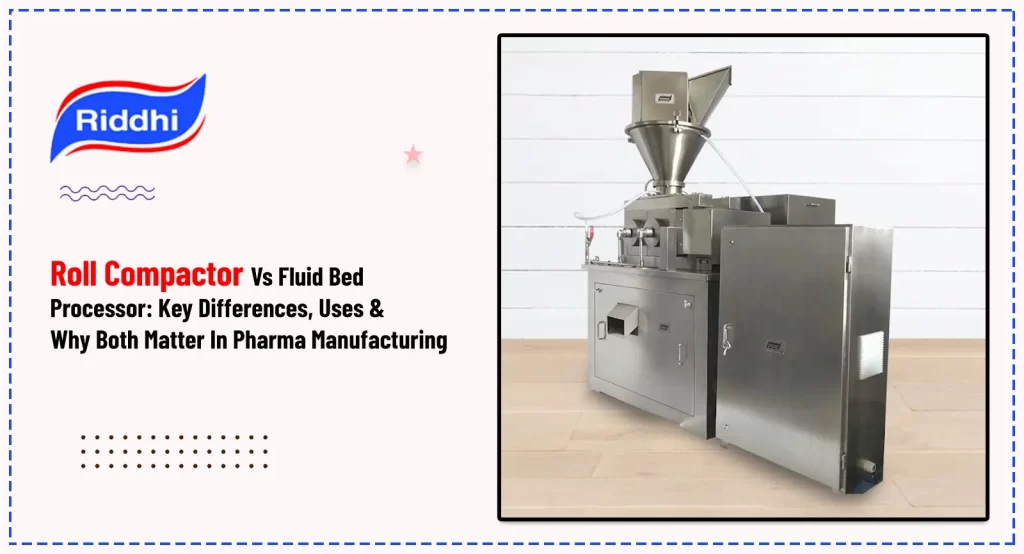
Roll compactors press powders into solid sheets, which are then broken down into granules. There’s no need for water or heat, just pressure. That’s why they work well for materials that could get damaged in regular processing.
Fluid Bed Processor vs Roll Compactor: Know the Difference
A lot of manufacturers make the mistake of treating these machines as interchangeable. They’re not.
Fluid Bed Processor:
- Uses air and sometimes liquid binders
- Best for wet granulation and drying
- Suitable for uniform coating processes
Roll Compactor:
- Works completely dry
- Ideal for sensitive formulations
- Focuses on density and flow improvement
If you try to replace one with the other, you’ll compromise product quality.
Why Using Both Gives Better Results
The real advantage comes when both machines are used strategically instead of choosing one over the other.
Combined benefits:
- Better control over granule size and uniformity
- Reduced batch rejection rates
- Lower material wastage
- Improved tablet compression performance
Common Mistakes To Avoid
Most production issues aren’t due to machine failure; they come from poor planning and improper use of the Fluid Bed Processor.
Avoid these mistakes:
- Using wet granulation when the formulation requires dry processing
- Ignoring Roll Compactor Machine Applications for sensitive materials
- Selecting machines based only on budget
- Not training operators properly
Conclusion
Both the Fluid Bed Processor and roll compactors are critical in modern pharmaceutical manufacturing. They are not competitors but complementary systems used for different processing needs. This processor handles drying, granulation, and coating efficiently, while roll compactors are essential for dry granulation, especially for moisture- or heat-sensitive formulations. Using them correctly improves product consistency, reduces waste, and ensures a more stable production process. With reliable solutions from Riddhi Pharma, manufacturers can achieve better performance and consistency. Ignoring their roles or misusing them will only lead to operational problems and lower output quality.