
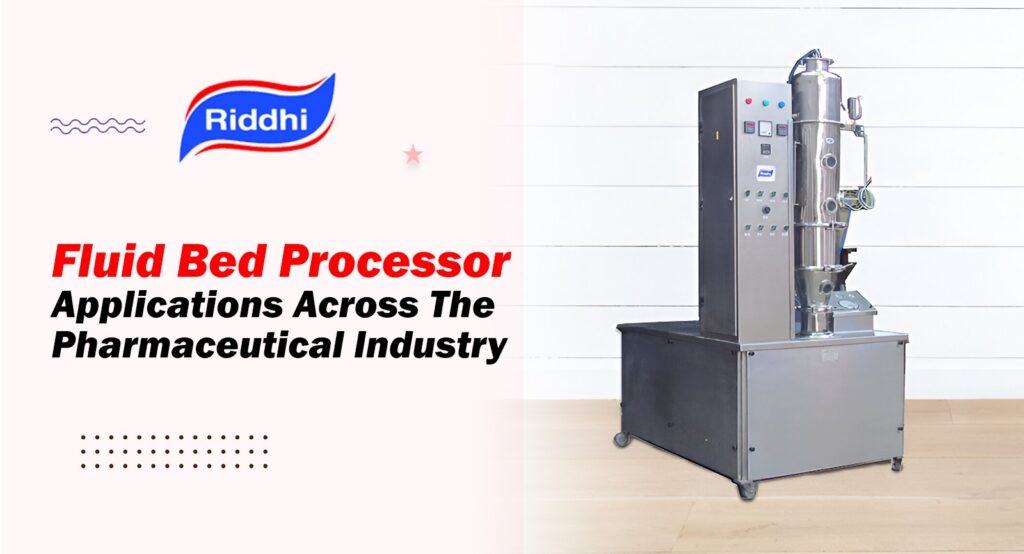
Fluid Bed Processor Applications Across the Pharmaceutical Industry
If you’ve ever wondered how a powdery mess of ingredients turns into a perfectly coated tablet or a granule, you’re looking at the work of a Fluid Bed Processor. But what exactly is it? In the pharmaceutical manufacturing unit, this machine is a bit of a multitasker. It’s the all-in-one solution for drying, granulating, and coating materials. Read this blog post to learn more about this machinery and its uses in the pharma sector.
What is a Fluid Bed Processor and How Does It Work?
It’s a machine that uses a strong upwards flow of air to lift solid particles. When the air hits the right speed, the particles start to behave like a boiling liquid—moving around, mixing, and suspended in mid-air. This state is called “fluidization,” and it’s where the magic happens.
The big advantage here is uniformity. Because every single particle is surrounded by air, you don’t get wet spots or clumps like you might in a traditional mixer. Everything dries or coats at the exact same rate.
Applications of Fluid Bed Processors
Fast Drying:
This is the most common use. It is incredibly efficient because the surface area of the particles is completely exposed to the warm air. What takes hours in a tray dryer takes minutes here.
Top-Spray Granulation:
This is used to make granules for tablets. A binder is sprayed from the top onto the “dancing” powder, making them grow into even-sized grains.
Bottom-Spray Coating:
This is for more sensitive jobs, like coating pellets with a drug layer or a protective film. The spray happens from the bottom, ensuring every pellet gets a perfectly even “jacket.”
Tangential Spray:
This is often used for making pellets or beads when you need a very dense and round final product.
Why B2B Buyers Care About Batch Consistency
If you are a plant manager or a procurement head, you aren’t just buying a machine; you are buying reliability. If one batch comes out slightly different from the next, it can lead to massive losses and regulatory headaches.
A high-quality Fluid Bed Processor needs to have precise control over air volume, temperature, and spray rate. If the machine is built poorly, you’ll deal with dead zones where powder gets stuck, leading to uneven drying. Choosing a machine with a polished, stainless steel finish and an easy-to-clean design is a must to meet strict safety standards.
The Business Impact of Efficiency
Time is money in a factory. A Fluid Bed Processor that combines mixing, granulating, and drying into one step saves floor space, reduces labor costs, and minimizes the risk of contamination because you aren’t moving the product from one machine to another. It’s an investment that usually pays for itself by simply speeding up the production cycle.
Conclusion
When you are manufacturing medicine, there is zero room for error. You need equipment that is built to last and designed to meet international standards. This is where Ridhi Pharma stands out. As a leading manufacturer and supplier, we specialize in high-performance Fluid Bed Processor units that are engineered for maximum efficiency. Our machines are known for their robust build and precise control systems, ensuring that every batch you produce meets the highest quality markers.
Whether you are setting up a new lab or scaling up a massive production facility, we provide durable products you need to keep your lines running smoothly. And if you deal in the pharma manufacturing industry and want to invest in bulk equipment, contact us now.

Riddhi Pharma Machinery Ltd.
Riddhi Pharma Machinery Ltd. has expertise in manufacturing pharmaceutical machinery. We have 28 years of experience in providing high-quality machinery solutions.