Automatic Tablet Coating Machine: Working Principle, Benefits & Applications
Introduction
Take a tablet from any strip and look at it closely. Many of them have a smooth, shiny and coloured surface. That finish is not just for looks. It is the result of a carefully controlled process that happens inside a coating machine.
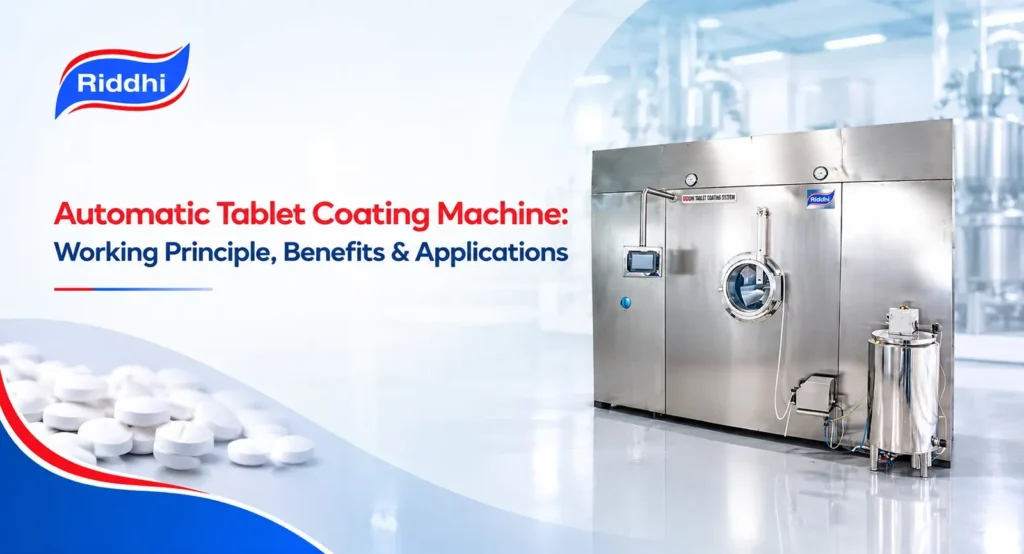
In the past, coating was done by hand in large pans, and the quality depended on the skill of the operator. Today, an Automatic Tablet Coating Machine handles most of this work with better accuracy. This blog explains how it works, its uses and benefits.
What Is an Automatic Tablet Coating Machine?
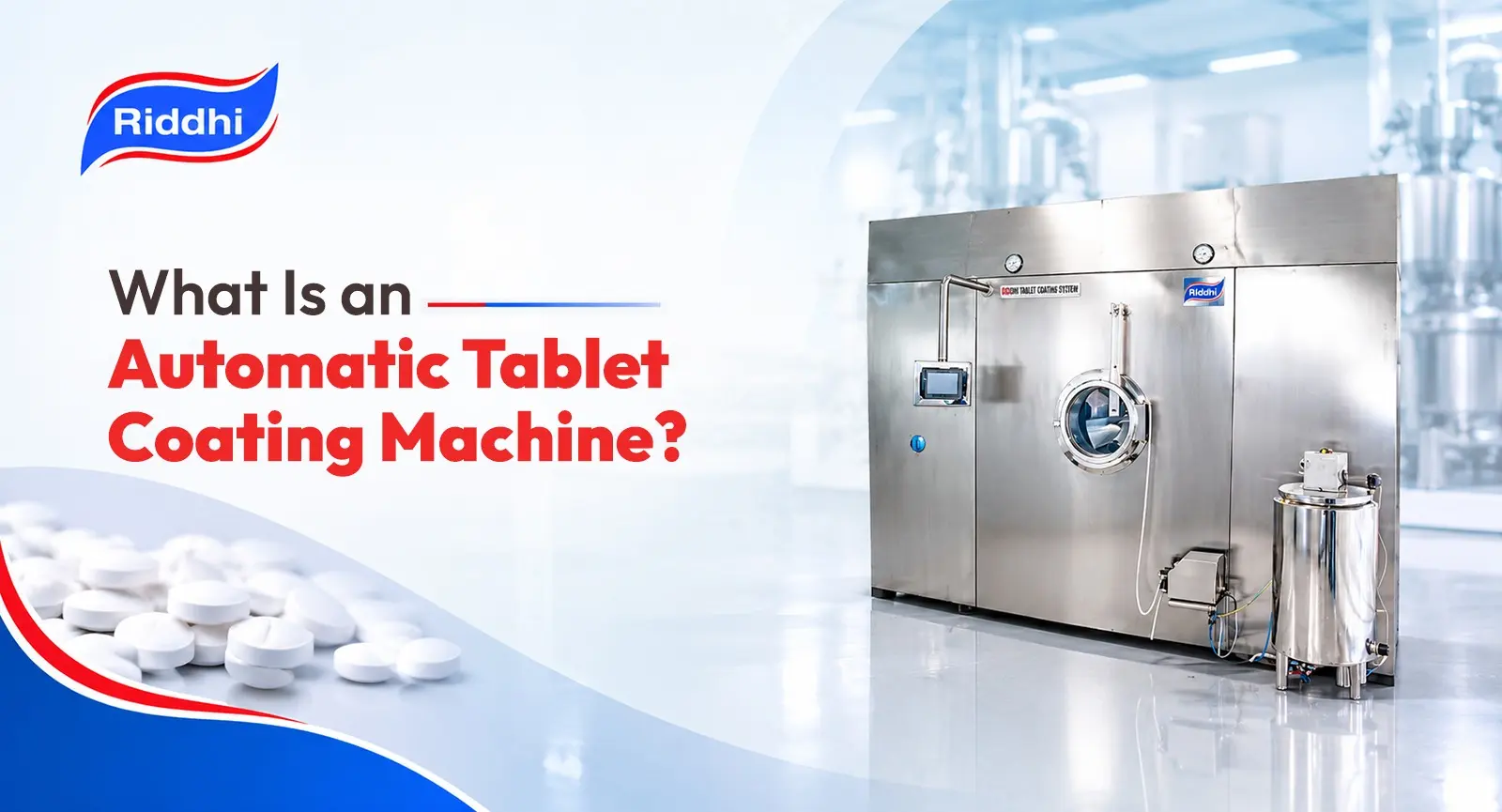
An Automatic Tablet Coating Machine is a piece of pharmaceutical equipment that coats tablets, pellets and similar solid dosage forms with a thin layer of coating material. The tablets rotate inside a drum, a coating liquid is sprayed on them, and warm air dries each layer.
In many factories, the same equipment is called an automatic tablet coater. The word “automatic” matters here. Spray rate, air temperature, pan speed and airflow are all controlled by the automatic system, so the operator does not have to adjust them by hand during the run.
This removes a common problem in older setups, where the result depended heavily on the skill of one person.
Why Are Tablets Coated?
A plain tablet can be bitter, dusty, sensitive to moisture or hard to swallow. Coating solves many of these issues at once.
- Taste and odour masking: bitter drugs become easier to swallow.
- Protection from moisture, light and air: this extends shelf life.
- Controlled release: special coatings let the drug release slowly or at a particular point in the body.
- Easy swallowing: a smooth surface helps patients, especially children and the elderly.
- Brand identity: colours and markings help in product recognition.
- Better handling: coated tablets are less likely to chip or produce dust.
How Does an Automatic Tablet Coating Machine Work?
The tablet coating process follows a clear sequence.
- The tablets are loaded into the drum.
- The drum starts rotating slowly, so the tablets roll over each other.
- Warm air is passed through the bed to pre-heat the tablets.
- Spray guns release a fine mist of coating solution.
- Hot air dries the coating almost immediately.
- Spraying and drying repeat until the required coating weight is reached.
- A final drying step removes leftover moisture before unloading.
Because the tablets keep moving, each one gets an equal share of coating. The exhaust system removes the moist air and carries away fine dust, which keeps the working area clean.
Main Parts of the Automatic Tablet Coating Machine
Knowing the parts helps buyers compare machines in a better way.
- Coating pan: a perforated drum, usually made of stainless steel, where the tablets rotate.
- Spray system: one or more spray guns with a peristaltic pump to deliver the coating liquid.
- Hot air unit: heats and filters the air that goes into the pan.
- Exhaust unit: removes moist air and fine dust.
- Control panel: a PLC with a touch screen to set and record the parameters.
- Spray solution tank: holds the coating liquid with a stirrer.
- Drive and gearbox: controls the speed of the pan.
Types of Tablet Coating
Not every tablet needs the same coating. The type is chosen based on the drug and the purpose.
- Film coating: a thin polymer layer that is the most common choice today. It is quick to apply and adds little weight.
- Sugar coating: the traditional method. It gives a thick, glossy finish but takes longer.
- Enteric coating: resists stomach acid and dissolves in the intestine.
- Functional coating: used for sustained or controlled release.
- Aqueous and solvent-based coating: water-based systems are preferred now because they are safer and cleaner.
Key Benefits of Automatic Tablet Coating Machine
Why do manufacturers move from manual pans to an automatic system? These are the main reasons.
- Uniform results: every batch gets the same finish and weight gain.
- Less human error: the controlled settings do not change from shift to shift.
- Time saving: drying is fast, and batch cycles are shorter.
- Lower wastage: less coating liquid and fewer rejected tablets.
- GMP compliance: closed design, smooth surfaces and recorded data help meet cGMP needs.
- Easy cleaning: many models have a CIP (clean-in-place) option.
- Scalable output: machines are available from lab size to full production size.
Applications
The equipment is useful in more places than most people expect.
- Pharmaceutical tablets: analgesics, antibiotics, vitamins and many other medicines.
- Nutraceuticals: health supplements and herbal tablets.
- Ayurvedic and herbal products: coating helps mask strong taste.
- Pellets and granules: for sustained release capsules.
- Confectionery: coating of sweets and chewable items.
- Research and development labs: small pilot units for trial batches.
Conclusion
An Automatic Tablet Coating Machine improves quality, saves time and supports consistent production. Understanding the working, coating types and key features helps you choose a machine that fits your product and budget. If you are looking for reliable, customised coating machines in bulk or for a single plant, you can get in touch with Riddhi Pharma Machinery Ltd, a manufacturer and supplier known for quality and after-sales support.
Frequently Asked Questions
Riddhi Pharma Machinery Ltd.
Riddhi Pharma Machinery Ltd. has expertise in manufacturing pharmaceutical machinery. We have 28 years of experience in providing high-quality machinery solutions.